The November 3 “Conversation About Rotary” will engage the Foundation theme and encourage participants to design a campaign for a grant proposal “For the Children.”
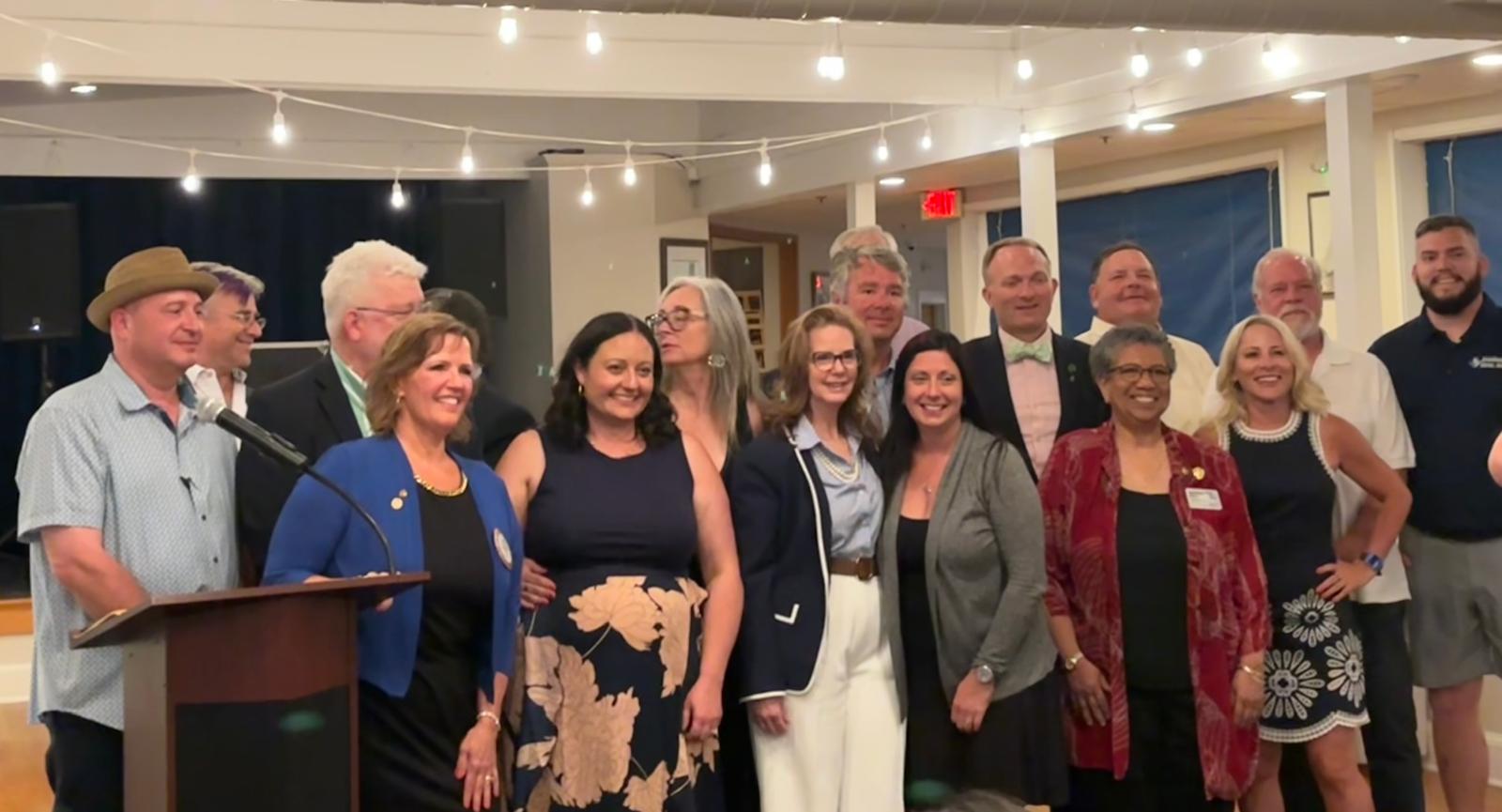
Marty Peak Helman, Rotary International Director representing Zones 28 and 32, presented on behalf of Jennifer Jones, Rotary Foundation Trustee Chair, three Zone 32 Certificates of Achievement and one Zone 32 Honorable Mention to District 7980 at the Zone Institute Cancún 2026 Zone Summit, September 2026.
Empowering Leaders, Serving Communities: The Third Conversation About Rotary
The third "Conversation About Rotary" meeting equipped Presidents and Presidents-elect with the leadership tools and confidence to transform their clubs—and their communities.
From Collaboration to Impact: 99,000 Meals Served
The session opened with an inspiring case study: the Bridgeport Club's partnership with Fairfield, Monroe, and Trumbull Clubs on a food packaging initiative that delivered over 99,000 meal servings to local food pantries serving families and children in need. Doug Wade walked attendees through the MyRotary lesson "Promoting Your Club as People of Action," detailing how four clubs united through Meals of Hope to package meals, mobilize community volunteers, and amplify their impact through strategic publicity.
Building Presidential Excellence
Julia guided Presidents and Presidents-elect through essential MyRotary resources—"Get Ready Club President" and "Understanding How Your Club Operates"—equipping them to lead with clarity, assess club health, and navigate the critical distinctions between Club and Board responsibilities.
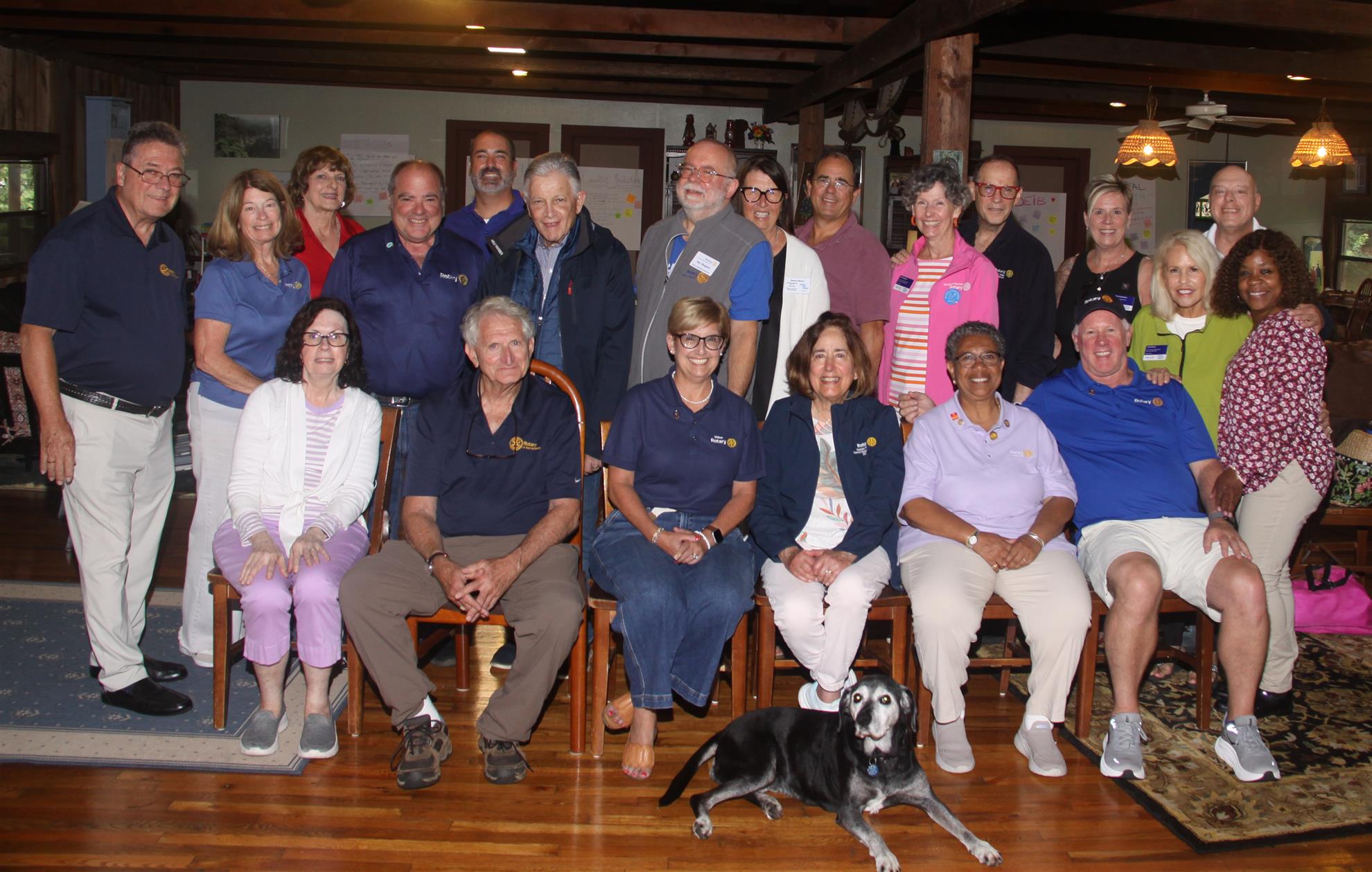
Meet your D7980 Leadership Team! Saturday, August 22, twenty-four members of D7980 representing Chairs of committees and sub-committees, PDGs, AGs, and the DG Track gathered on Laurel Island to debate their goals for the year and collaborate across the boundaries of their individual groupings. Engaging with topics on leadership, service, membership, public image, foundation, and the yearly theme, “For the Children,” groups brainstormed solutions to case-study problems and the support needed to create lasting impact for peace. All are available as speakers (except the dog, sorry) for your clubs, to conduct Club Health Checks, and to listen to your ideas during the next “Conversation About Rotary & Pre-PELS” (September 1) and the District Learning Assembly (October 3). [Julia Kushigian-Secor, DGE & AI, story; Andrew Stein, photo]
Rotary International encourages member disputes to be resolved at the local club level whenever possible, guided by the Rotary Code of Conduct and the Four-Way Test. District 7980 is developing a Conflict Resolution Team to support Rotarians when concerns cannot be resolved within their club. The team’s purpose is to provide a safe, confidential, and neutral place for Rotarians to discuss concerns, better understand conflict, and identify constructive next steps that are “fair to all concerned.”
Stronger Together: The Power of Rotary Collaboration
Rotary clubs can accomplish a great deal on their own, but we can do even more when we work together. Across Southern Connecticut, collaboration between clubs and community organizations is helping us share resources, bring more people together, and expand the impact of our service.
The Power of Rotary Collaboration
More Volunteers, Ideas, Resources, and Connections
Many service organizations face the same challenges: finding enough volunteers, raising funds, developing new ideas, and responding to growing needs. Collaboration allows us to pool our strengths. One organization may have volunteers, another may have community connections, and another may bring resources or a new idea. Each partner brings something valuable to the table.
Collaboration Does Not Mean Losing Your Club’s Identity
Sometimes clubs hesitate to collaborate because they are concerned about losing recognition or their individual identity. Working together does not mean giving that up. Every Rotary club should be proud of what makes it unique. Collaboration simply gives us another way to serve, while introducing our clubs to new people and new communities.
“When you collaborate with another organization, there can be a concern about losing recognition. In my experience, the opposite happens. Working together expands what we can accomplish.” — Stephanie Philips, District Governor, Rotary District 7980
Stephanie Philips: Unlocking Rotary Global Grants for Southern Connecticut’s Clubs
When it comes to expanding the reach of community service projects, Rotary Global Grants remain one of the most powerful, yet misunderstood, tools available to clubs throughout Southern Connecticut and beyond. Under the stewardship of Stephanie Philips, 2025-2026 District Governor for Rotary District 7980, and a pillar of collaborative service, club leaders are discovering anew how these grants aren’t just additional funding—they’re transformative multipliers for humanitarian impact.
Stephanie’s journey is best described as one of persistent dedication and vision. With over a decade of experience uplifting clubs and a history of award-winning leadership marked by a calm, inclusive spirit, Stephanie knows firsthand that a global perspective drives local results. Her open approach, coupled with Rotary’s emphasis on both local and international collaboration, empowers club presidents, volunteer coordinators, and service chairs to maximize their resources and truly ‘think big’ with community projects. As she shares, clubs in District 7980 are uniquely positioned not only to serve their neighborhoods, but to rally for global change—provided they know how to tap into every resource available.
Imagine attending a Rotary Club meeting where the entrance ramps welcome everyone, meeting materials are easy to read, and members can choose to connect virtually if they cannot be there in person. This is not just an ideal—it reflects what Rotary was built on: service, inclusion, dignity, and creating opportunities for all. In this article, Stephanie Philips, 2025-2026 District Governor for Southern Connecticut’s Rotary District 7980, shares her expert perspective on why Rotary club accessibility importance must become a top priority for clubs everywhere.
By understanding the real meaning of accessibility and learning simple, powerful ways to implement it, Rotary Clubs can lead by example in building communities where every person feels valued and empowered to contribute.
Understanding the Rotary Club Accessibility Importance: A Foundation of Inclusion and Service
Definition of accessibility within Rotary Clubs
How accessibility aligns with Rotary’s core values of service, inclusion, and dignity
The impact of removing barriers on member participation and contribution
Accessibility in Rotary Clubs means more than meeting legal requirements; it embodies the spirit of true inclusion—ensuring all members, regardless of physical ability or special needs, can fully participate in fellowship, leadership, and service opportunities. Stephanie Philips stresses that it “reflects the very values that Rotary was founded upon: service, inclusion, dignity, and creating opportunities for everyone to participate. ” This is about meeting individuals where they are, not expecting conformity to a single mold.
Removing barriers opens the doors for a broader range of people to contribute their unique talents and perspectives. Whether someone uses a wheelchair or has vision challenges, or needs adaptive communication tools, purposeful accommodations foster belonging and empowerment. "Inclusion is not charity. It’s recognizing that every person has value and something meaningful to offer,” Stephanie Philips emphatically explains. Embracing accessibility strengthens the club’s fabric and enriches its outreach and impact.
What transforms a group of volunteers into a purpose-driven powerhouse? For Rotary Clubs across Southern Connecticut and beyond, recognition isn’t just about applause—it’s about creating lasting impact and fuelling the spirit of service that changes lives. Rotary service awards are more than accolades; they’re crucial pillars for retention, motivation, and mission alignment. In this guide, we unpack how to apply, qualify, and strategically leverage recognition with District 7980's Governor, Stephanie Philips, a celebrated Rotary leader whose career is defined by collaborative service and transformative club culture. Whether you’re a Club President, Community Service Chair, or anyone passionate about making service sustainable, let Stephanie’s proven insights inspire your club’s next chapter.
Stephanie Philips on Why Rotary Service Awards Are Essential for Volunteer Motivation
Recognition, as Stephanie Philips of Rotary District 7980 asserts, is the heartbeat of sustained volunteer engagement. While many join Rotary for its causes, eradicating polio, mentoring youth, addressing food insecurity- it’s the deeper affirmation of their work that fuels their long-term commitment. As a leader with over a decade of hands-on Rotary experience, Stephanie’s tenure is proof that awards and recognition events are not an afterthought but a strategic necessity for strengthening clubs. According to her, “People continue volunteering because they know they’re making a difference and feel appreciated. ” This is more than a simple ‘thank you’; it’s about cultivating shared purpose and igniting momentum that attracts new members while reinvigorating seasoned ones.
"People continue volunteering because they know they're making a difference and feel appreciated. Recognition is not just about rewarding service; it’s an expression of gratitude that inspires others to continue." — Stephanie Philips, Rotary District 7980
How do you unlock greater impact for your Rotary Club’s service projects? The answer is both simple and bold: by making Rotary Club collaboration radically inclusive—welcoming nonmembers to play an active role. Stephanie Philips, 2025–2026 District Governor of Southern Connecticut’s Rotary District 7980, has seen firsthand how this model not only grows volunteer ranks but forges deeper, richer connections in every community touched by Rotary service.
In this expert-driven guide, Stephanie shares proven, replicable strategies to help club leaders, community organizers, and service champions like you build the strongest possible teams—by inviting the public to join you from day one. Her innovative approach, developed over years of local leadership and dozens of successful projects, will challenge everything you thought you knew about volunteer engagement and the impact of community outreach.
Stephanie Philips on Why Rotary Club Collaboration Must Embrace Non-Rotarian Volunteers First
Far too often, Rotary clubs fall into the pattern of relying solely on their own members to staff service events. According to Stephanie Philips, this well-meaning instinct unintentionally limits reach and impact. Stephanie’s unique vision—shaped by decades of community and leadership experience—turns that notion on its head: true rotary club collaboration means inviting the entire community into your mission.
Stephanie notes, “Many Rotarians believe that all their activities have to be supported by volunteers from the Rotary Club. That's not true. The most impactful projects have come by inviting the public to volunteer using social media, word-of-mouth, flyers, and any opportunity to engage people who don't know about Rotary, but want to do something to give back to their community. ” Her perspective is clear—when clubs reframe service as open, inclusive, and collaborative, dramatic new possibilities emerge.
“The most effective impactful projects have come by inviting the public to volunteer using social media, word-of-mouth, flyers, any opportunity to engage people that don't know about Rotary, but wanna do something to give back to their community.” – Stephanie Philips, Rotary District 7980
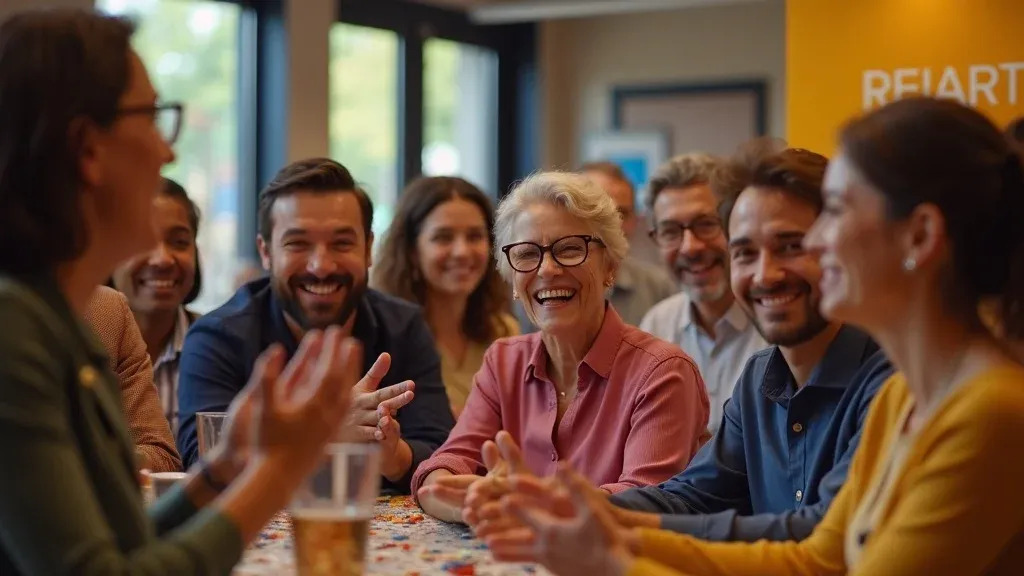
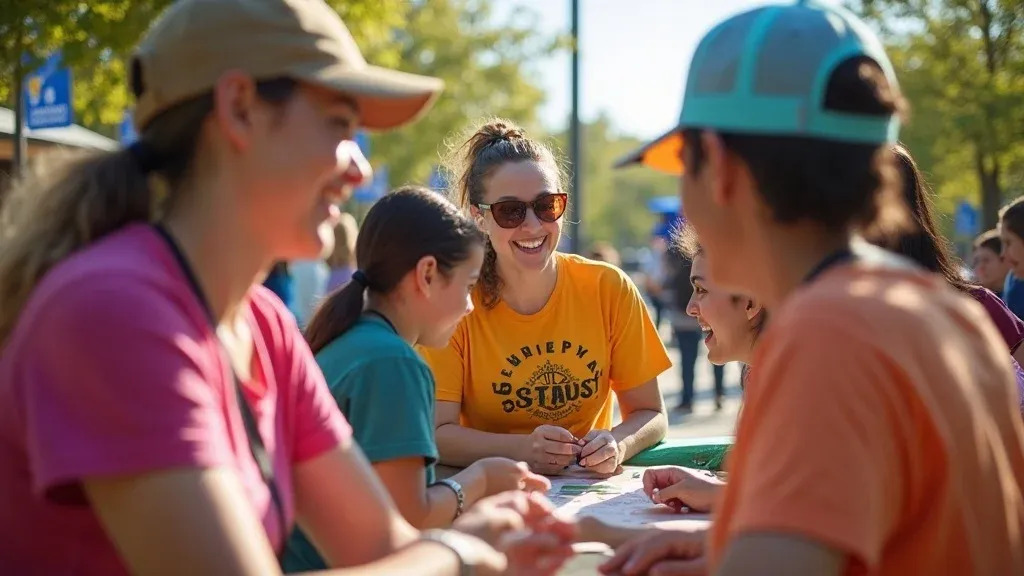
Rotary event planning carries the potential for far more than just raising funds; it can transform your club’s entire approach to service and sustainability. Yet, too often, leaders and coordinators miss the opportunity to blend powerful fundraising with meaningful community impact.
As Club Presidents, Community Service Chairs, District Governors, and nonprofit strategists in Southern Connecticut and beyond look to maximize the results of every event, the insights from seasoned leaders become indispensable.
Enter Stephanie Philips of Rotary District 7980, 2025–2026 District Governor, whose decade-plus record of service and innovation sets a new standard for what Rotary events can achieve. In this article, we’ll unpack Stephanie’s proven, mission-driven approach to event planning that delivers “aha moments” and practical tactics any Rotary leader can use to redefine success.
Welcome to an exciting new Rotary Year! I invite you to join me on a journey that promises to be engaging, rewarding, and yes—occasionally challenging—as we grow together in service and fellowship.
Have you ever felt a bit uncertain about certain aspects of Rotary? While the warmth of our friendships and social connections is unmistakable, perhaps you've wondered about specific terms, abbreviations, processes, or next steps in your Rotary journey.
If so, you're not alone, and we'll navigate these questions together in the year ahead. I'm Julia Kushigian-Secor, and I'll serve as your District Governor Elect (DGE) until January 16, 2027, when I'll transition to District Governor (DG) for an 18-month term through June 2028.
Rotary clubs across Southern Connecticut are facing the challenge—and the remarkable opportunity—of expanding and energizing their ranks as they look toward 2026. But how do you meaningfully drive Rotary club membership growth in an era defined by shifting community expectations, generational transitions, and constant calls for purposeful service? The answer, as brought to life by District 7980 Governor Stephanie Philips, isn’t only about bigger numbers; it’s about building clubs where members are engaged, empowered, and feel essential from day one. For presidents, community service chairs, district governors, and all service leaders, understanding and replicating this culture of instant engagement may be the single most transformative step you can take.
Unlock Rotary Club Leadership: Why Communication is Your Most Critical Skill
"The most important skill for a new club president is communication—especially the ability to listen and embrace new ideas." – Stephanie Philips, Rotary District 7980
Strong rotary club leadership in 2025 begins—and endures—with one core capability: communication. As Stephanie Philips, a seasoned past president and District Governor for Southern Connecticut's Rotary District 7980, reveals, the heart of effective leadership lies not in authority, but in a club president's ability to truly listen and foster an open exchange of ideas. "It’s not just about speaking or making announcements," Stephanie emphasizes. "It’s about creating an environment where every board member and general member feels not only heard, but inspired to contribute. " Her experience demonstrates that genuine two-way communication breathes life into any project or initiative. Without it, even the boldest vision can falter. In a fast-changing world where new challenges and opportunities constantly arise, the best Rotary leaders set themselves apart by their willingness to listen deeply and invite fresh thinking, making every member feel indispensable to the club’s shared journey.
According to Stephanie, communication isn’t about wielding a gavel—but about building trust, rallying support, and drawing every voice into the Rotary conversation. For today’s presidents and board members, the club’s vitality hinges on collaborative dialogue. Whether navigating a major community service initiative or addressing everyday concerns, presidents who lead with humility and openness foster a club culture where innovation thrives and obstacles become stepping stones. Stephanie’s long record of bringing members together—across generations, professions, and backgrounds—underscores a simple truth: the Rotary club leadership that listens is the leadership that lasts.
Imagine entire nations reclaiming their freedom and identity not through weapons or armed conflict, but through the collective power of song. The Baltic singing revolution legacy stands as a profound example of how music can unite, inspire, and empower oppressed peoples to achieve political and cultural liberation. This article explores the stirring story of Jurate Svedaite-Waller, who lived through the Baltic Singing Revolution, highlighting its compelling lessons for modern peace committees seeking effective, nonviolent means to foster community resilience and peace.
Rotary club presidents carry a unique responsibility: inspiring community service, fostering collaboration, and leading their members toward meaningful change. In Connecticut’s Rotary District 7980, these leaders are shaping the future of their communities and embodying the Rotary leadership training ethos that empowers individuals to ignite collective impact in 2026. To demystify what it really takes to prepare, support, and elevate incoming presidents, we turn to Stephanie Philips, the 2025–2026 District Governor of Southern Connecticut and one of Rotary’s most decorated, trusted voices in service leadership. Drawing from over a decade of hands-on experience, Stephanie reveals how well-designed leadership training doesn’t just prepare club presidents—it transforms entire communities.
Stephanie Philips on Why Rotary Leadership Training Matters for Connecticut Presidents
According to Stephanie Philips of Rotary District 7980, the transition into the Rotary club presidency is a defining moment not only for the individual but for every member they serve. “The journey from active member to club president is a leap into a leadership role where communication, empathy, and vision become paramount,” Stephanie explains. With the demands of local volunteer coordination and the expectations set by global Rotary standards, the importance of targeted Rotary leadership training cannot be overstated. A robust leadership skillset helps presidents bridge the gap between Rotary’s mission and the unique challenges faced by Connecticut’s diverse communities.
As Stephanie describes, “A club’s success hinges on the president’s ability to unite their team, understand their community’s heartbeat, and translate Rotary’s values into tangible action. ” For club presidents stepping into this pivotal role in 2025, cultivating these attributes isn’t simply desirable—it’s essential for enduring impact.
Robert B. Friend’s Vision: Service as the Ultimate Path to Community Impact and Membership Growth
In Southern Connecticut, Rotary district service projects are not just about lending a helping hand—they are catalysts for transformation, engagement, and sustainable growth for clubs and communities alike. At the helm of this movement is Robert B. Friend, Past Governor of Rotary District 7980 and an indomitable advocate for leadership through service. For Robert, Rotary’s core belief, “service above self,” is more than a motto—it’s a blueprint for unlocking the power of connection, inspiring authentic involvement, and amplifying the influence of Rotary far beyond local borders.
“Every service project is an invitation,” Robert reflects, “not just to do good, but to experience the profound satisfaction of belonging to something bigger—of turning compassion into action, and action into community. ” This article delves deeply into Robert’s expert strategies, hard-won lessons, and the ‘aha moments’ that every Rotary Club President, Community Service Chair, Nonprofit Executive, and civic leader must internalize to harness the full impact of their district service initiatives. As you read, you’ll discover how intentional service projects activate communities, ignite new membership, and serve as a living testament to Rotary’s enduring global vision.
"Rotary is all based on service. That is our motto, service above self. And when it comes to community engagement, that's where we are highly visible in the community." – Robert B. Friend, Rotary District 7980 Past Governor
Rotary district service benefits in action: Lively teamwork and impactful community planning empower local leadership and sustainable growth.
Robert B. Friend on Why Rotary District Service Benefits Ignite Community Leadership
“Leadership is about making life better for the people we touch and the world we influence.” – Robert B. Friend, Rotary District 7980 Past Governor
What does it take to truly transform community leadership? Ask Robert B. Friend—a visionary whose journey has spanned global enterprise, family, and grassroots service—and his answer is clear: the real catalyst lies in rotary district service benefits that bring people together, leverage unique strengths, and offer a blueprint for meaningful action. Far beyond mere philosophy, Robert’s experience with Rotary District 7980 has proven how leadership can mobilize diverse resources, bridge divides, and catalyze sustainable, visible change at every level.
According to Robert, every successful community initiative begins with listening: “Understanding what truly matters to people—what keeps them up at night, what sparks hope—lays the foundation for authentic leadership. ” With Rotary District Service at the helm, powerful transformations become not just possible, but inevitable. This article unlocks these transformative benefits, imparting Robert’s wisdom for Rotary Club Presidents, Community Service Chairs, nonprofit executives, and other leaders seeking to spark growth through collaborative service.
Robert B. Friend’s Vision: Unlocking Rotary Membership Growth Through Teamwork and Strategy
Imagine Rotary clubs across Southern Connecticut bustling with new energy, vibrant projects, and a sense of unified momentum. What drives such transformation isn’t luck or circumstance—it’s deliberate, strategic action, powered by people with a commitment to both rotary membership growth and meaningful community impact. According to Robert B. Friend, Past Governor of Rotary District 7980, meaningful change starts with more than just hope; it requires a plan, a collaborative spirit, and a bold willingness to embrace new ideas.
Stephanie Philips on Why Rotary Club Recruitment is Critical for Sustained Community Impact
In the evolving landscape of community service and volunteer engagement, Rotary Club recruitment stands as the keystone to sustaining and amplifying the transformative projects that touch every corner of our communities and beyond. No one understands this better than Stephanie Philips, Governor of Rotary District 7980 (Southern Connecticut) for 2025–2026. With over a decade of steadfast, hands-on leadership—ranging from on-the-ground service initiatives to strategic district-wide planning—Stephanie’s vision is shaped by years of actionable wisdom and a passion for connecting people to purpose.
Stephanie’s approach is marked by a calm, inclusive leadership style and an unwavering commitment to cultivating new leaders and fresh ideas. According to Stephanie, “Our goal is for every club to be in positive growth, ideally 5 to 10 percent annually, so we can continue funding impactful projects locally and globally. ” This single-minded dedication to growth isn’t just a strategy—it’s a mandate for relevance and sustainability, ensuring Rotary Clubs remain vibrant engines for positive change. For presidents, volunteer leaders, district officers, and event planners, her insights are not just timely—they’re essential roadmaps for 2025 and beyond.
"Our goal is for every club to be in positive growth, ideally 5 to 10 percent annually, so we can continue funding impactful projects locally and globally." — Stephanie Philips, District Governor
Stephanie Philips on Why Rotary Club Collaboration Transforms Communities
"When people think about service, they often think about dollars raised or meetings held. Rotary is different. The impact is something that you can actually see." — Stephanie Philips, Rotary District 7980
For community leaders, nonprofit organizers, and social impact professionals across Southern Connecticut, the term rotary club collaboration is no abstract slogan—it's a blueprint for results you can truly see and feel. Stephanie Philips, the dynamic 2025–2026 District Governor of Rotary District 7980, brings a lifetime of civic leadership to her role as the architect of cooperation among Rotary Clubs throughout the region. Guided by warmth and resolute collaboration, Stephanie has inspired transformative change not only locally, but also on the global stage, demonstrating what happens when leadership translates vision into action. Her firsthand experience lights the way for anyone yearning to transform community spirit into measurable outcomes.
From providing food for families in crisis to launching literacy initiatives that open new futures for children, Philips insists the proof of Rotary Club collaboration lies in the tangible joys and relief it brings to neighbors. Under her guidance, clubs across District 7980 are redefining what it means to serve—making the work both highly visible and perpetually meaningful. As Stephanie shares, the ripple of Rotary’s impact extends not only through Connecticut’s neighborhoods but also across continents, ensuring that effective partnership is the engine behind every sustained act of service.
Stephanie Philips’ Core Insight: Proactive Engagement Is Rotary’s Key to Inclusion
In the intricate tapestry of Southern Connecticut’s communities, Rotary clubs have a singular opportunity—and responsibility—to create truly inclusive community service projects. Stephanie Philips, the 2025–2026 District Governor of Rotary District 7980, puts it succinctly: the biggest barrier isn’t lack of goodwill, but unconscious assumptions about which groups are interested in joining Rotary’s mission. Drawing on over a decade of service—spanning local leadership, award-winning club initiatives, and a profound commitment to equity—Stephanie emphasizes that deep impact starts with reaching out to communities that Rotary may not see every day. Her experience brings an “aha moment” that will resonate with anyone seeking to expand their club’s reach: “Often, what holds us back is simply not asking. ” According to Stephanie, genuine inclusion isn’t just a value—it’s the strategic foundation for stronger clubs and more vibrant neighborhoods.
As District Governor, Stephanie leads by example, having built bridges with groups ranging from faith-based organizations to LGBTQ+ advocates in Stratford and beyond. She explains that each relationship forged expands Rotary’s lens on local needs, sparks participation from new audiences, and makes service projects more relevant to the people they’re meant to benefit. In Stephanie’s world, the question is never “Will they be interested?” but always “How can we make them feel welcome and valued?” This subtle yet transformative shift lies at the heart of innovative, high-impact community service in 2026.
"The challenge is they usually assume these community groups they don’t see or hear from wouldn’t be interested in Rotary — which is absolutely untrue." - Stephanie Philips, District Governor, Rotary District 7980
In a time when Rotary member engagement determines the vibrancy and effectiveness of every club, one pressing question persists: How can Rotary clubs not only attract, but truly reflect the diverse fabric of the communities they serve? Stephanie Philips, District Governor for Rotary District 7980 in Southern Connecticut and an acclaimed leader in multi-cultural engagement, offers a practical, experience-based roadmap. As someone revered for her warmth, collaborative spirit, and measurable results, Stephanie brings not only Rotary honors but real stories from the field — stories that spark “aha moments” and actionable insights for Rotary Club Presidents, Community Service Chairs, and impact-minded volunteers seeking to grow thriving, inclusive clubs.
Stephanie Philips’ Vision: Embracing Diversity as Rotary’s Strength
“Rotary is about belonging and inviting all cultures, all backgrounds. Having that diverse community only strengthens our membership and enhances our ability to serve.” — Stephanie Philips, Rotary District 7980
According to Stephanie Philips, genuine Rotary member engagement begins when clubs see diversity not as a challenge, but as a foundational strength. Philips, who has sponsored over 25 new members and steered countless initiatives in food security and youth empowerment, believes that diverse backgrounds spark innovation and deepen Rotary’s impact. Her leadership within District 7980 has illuminated an undeniable truth: “When people of color, Asian, and Jewish communities feel seen, valued, and directly invited to the table, Rotary clubs experience richer conversations, stronger service projects, and an unmistakable growth in both morale and results. ”
Drawing from years leading diverse volunteer teams across Southern Connecticut, Stephanie notes that membership growth and retention flourish when inclusivity is woven into club culture. By fostering belonging and collaboration, Rotary not only mirrors the broader community — it elevates its ability to deliver on Rotary International’s mission of service above self.
Stephanie Philips’ Core Insight: Overcoming Engagement Misconceptions to Retain Rotary Members
"The biggest misconception is that once a member is not involved, it’s impossible to reengage them." – Stephanie Philips, Rotary District 7980
When it comes to rotary member engagement, Stephanie Philips, 2025–2026 District Governor of Southern Connecticut’s District 7980, is a leader who cuts through clichés and inspires action. With over a decade of storied service and repeated recognition for her hands-on, heart-driven leadership, Stephanie has witnessed firsthand the challenges Rotary Club presidents face in keeping members involved. She believes the common belief—that once members disengage, they’re lost for good—is not only false, but self-defeating. According to Stephanie Philips, the real journey begins when we toss these myths and approach networking with compassion, precision, and intention.
Stephanie’s approach is rooted in the idea that engagement is not a one-way street nor a door that closes forever. Her background in growing membership, championing diversity, and orchestrating award-winning projects shows that every member—no matter how silent—possesses untapped potential to reengage. “Reengagement is not only possible, it’s necessary for club vitality,” she asserts. Such a perspective reframes setbacks as opportunities and sets the tone for Rotary leadership that aims higher, thinks deeper, and never gives up on the people who once said “yes. ”
Rotary Club Presidents, Community Service Chairs, Volunteer Coordinators, Nonprofit Leaders, Event Organizers, and Corporate Social Responsibility Managers: If you’re driven to see your community service projects genuinely move the needle—in towns, cities, and even across borders—this is your in-depth guide. Under the leadership of Julia A Kushigian-Secor, PhD, District Governor Nominee for Rotary Southern Connecticut District 7980, the Rotary movement in Southern Connecticut is redefining what it means to drive sustainable, high-impact change. Join us as we deconstruct transformative strategies from the front lines of Rotary leadership and illuminate how your club can replicate—and scale—their maximum impact.
Julia A Kushigian-Secor on Debunking Misconceptions About Community Service Projects
The road to successful community service projects is often misunderstood as being tangled in red tape or requiring resources and expertise beyond reach. According to Julia A Kushigian-Secor, PhD, District Governor Nominee for Rotary District 7980, the real starting point is much simpler: “Too many people think Rotary work is overwhelmingly complicated, but at its core, it’s quite the opposite. It’s about local passion, understanding your surroundings, and channeling what you and your group do best to meet actual needs. ”
Kushigian-Secor’s experience overseeing dozens of local and international projects has repeatedly confirmed that demystifying the process encourages participation and innovation. Her approach encourages leaders not to start with the obstacles, but with the inherent strengths that both club members and communities already possess. “You are building something extraordinary by working together in a community you love and know well,” she notes, underscoring that effective service is born from authentic engagement, not complexity.
"The biggest misconception that people have in Rotary is that it is overwhelmingly complicated. But it really isn’t — it’s about matching your strengths to the real needs of your community." — Julia A Kushigian-Secor, PhD, Rotary District 7980
Did you know that many Rotary clubs face declining member retention primarily because members feel disengaged or bored? Understanding diverse member interests is the key to reversing this trend. In this article, we explore proven strategies to maximize rotary member engagement by recognizing unique member passions and tailoring projects that excite and involve all. Featuring expert insights from Stephanie Philips, District Governor of Rotary District 7980, learn how clubs can foster vibrant, enthusiastic participation and overcome retention challenges effectively.
What You'll Learn
The importance of recognizing diverse interests within Rotary clubs
Effective strategies to boost rotary member engagement
How personalized projects can enhance member retention
Expert insights from a Rotary leadership perspective
Common misconceptions about member engagement and how to overcome them
Overview of Rotary Member Engagement
“The biggest misconception is that all members want to do the same project or have the same enthusiasm for every project. That isn't the case.” – Stephanie Philips, District Governor, Rotary District 7980
At the heart of any thriving Rotary club lies strong Rotary member engagement. But engaging diverse members meaningfully is complex. Rotary member engagement means creating opportunities where members actively participate, grow personally and professionally, and feel connected to the club’s mission and community. Stephanie Philips, District Governor of Rotary District 7980, highlights that understanding the range of interests within a club is indispensable.
Recognizing that each member has unique priorities, preferences, and enthusiasm levels allows club leaders to tailor activities that appeal broadly. This helps foster authentic involvement rather than forcing a one-size-fits-all approach. Because member excitement directly correlates with retention, Rotary clubs that embrace this diversity see stronger participation in their initiatives over time.
Did you know that many Rotary clubs are struggling with member retention due to a lack of engagement? This persistent challenge calls for innovative and thoughtful approaches tailored to diverse member interests. In this comprehensive guide, we explore how Rotary club leaders, like Stephanie Philips, District Governor of Rotary District 7980, are pioneering effective strategies to keep members motivated and excited about their community work.
Startling Facts About Rotary Member Retention and Membership Engagement
Many Rotary clubs face declining member retention rates due to a lack of engagement.
Diverse member interests require tailored approaches to keep volunteers motivated.
Rotary International emphasizes innovative strategies to boost membership engagement.
Stephanie Philips’ Core Thesis: Why Rotary Leadership Training is Key to Cultivating Effective District Governors
"Rotary's leadership program is one of the best that is offered, and it's wonderful that anyone can attach. It's not just for district governors but for presidents and upcoming leaders, providing vast personal and professional growth opportunities." – Stephanie Philips
Kindness is Caring, Friendship is Sharing is now published and ready to share with children in our communities. Featuring Amani the zebra, this joyful story introduces kindness, friendship, and Rotary’s Four-Way Test in a way young readers can understand and embrace.
As we celebrate National Read Across America Day on March 2, I encourage every club to step into a classroom, library, or community center with this book — or one of your choosing — and make reading aloud part of your literacy commitment this year.
Addressing literacy gaps — especially as many programs face reduced funding — has been one of my key district priorities this year. Strong literacy skills open doors for children, strengthen families, and build healthier communities. Reading aloud is simple, powerful, and deeply impactful. One book. One visit. A lasting difference.
Written by New York Times bestselling author Tish Rabe and brought to life through the leadership of Beth Stoller of the Trumbull Rotary Club, this project reflects Rotary at its best. Let’s show up, read out loud, and remind children that kindness matters.
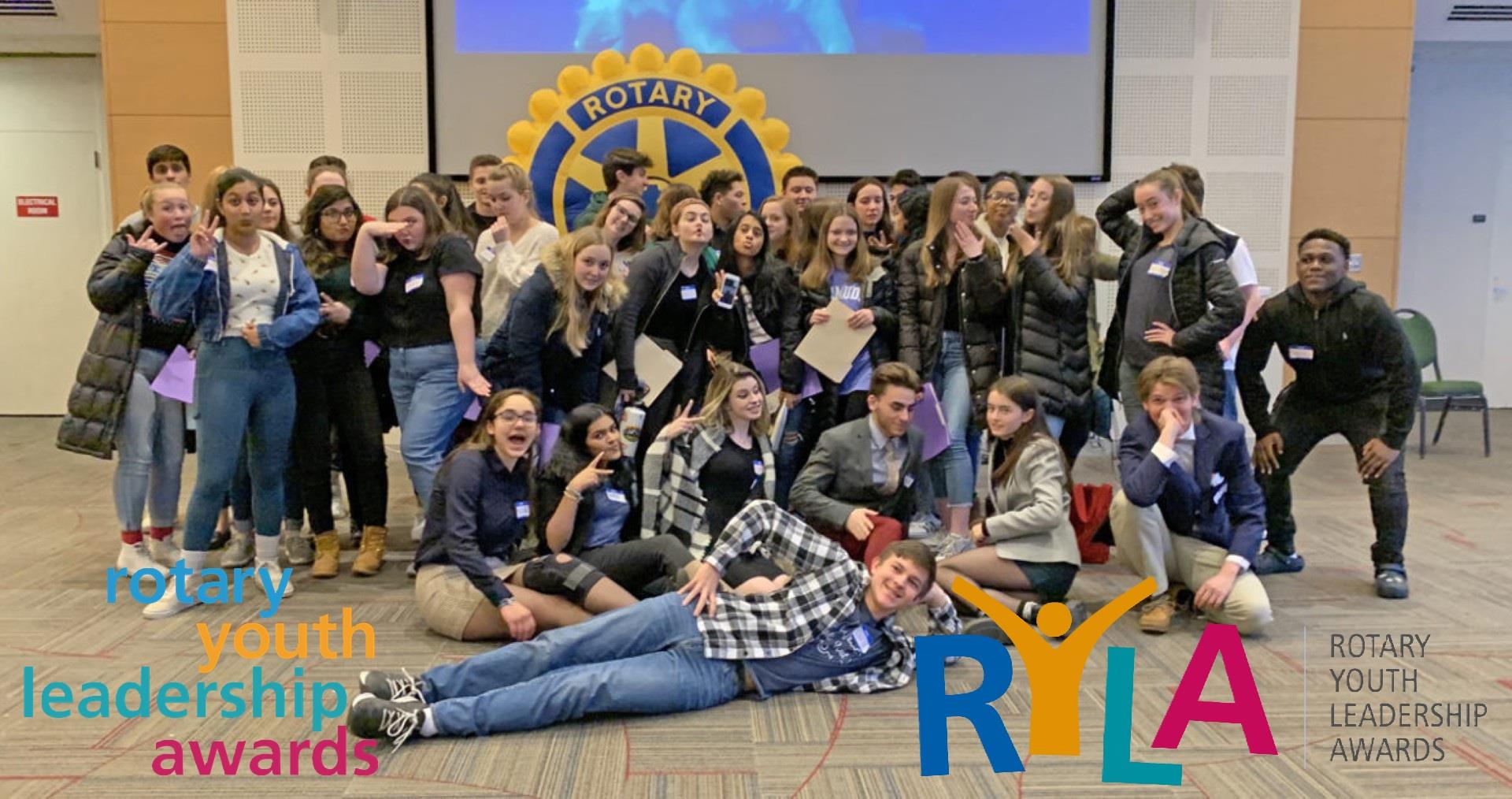
Click Here for: Student Participation Registration for Spring RYLA 2026
* Application due date: Friday, April 3rd, 2026 * Newtown Community Center * Sponsorship Club or Sponsor payment due date: Saturday, April 4, 2026 * Conference Date: Saturday, April 11, 8:00 AM – 6:00 PM (students will commit to the entire day)
Cost is $200 for the sponsor/sponsoring organization (local Rotary Club, family, school or civic organization).
Students are responsible for verifying that the organization has paid or is committed to paying the sponsorship fee.
The role of a Rotary district governor has always required determination, vision, and an unwavering commitment to community service. But in 2026, under the guidance of Stephanie Philips, District Governor for Rotary District 7980 in Southern Connecticut, this role is being redefined—infusing it with lived experience, authentic empathy, and a trailblazing drive for diversity and inclusion. What does it look like to lead when your own background represents a rarely-seen voice at the top? How does this perspective propel a district and its clubs to new heights of innovation and connection? Today, we step into the world of Stephanie Philips—a recognized leader and catalyst whose unique journey inspires not just Rotary members but anyone invested in social impact and community transformation.
For many, joining Rotary conjures images of just volunteering a few hours to make a difference—but there’s a far richer story behind every member’s badge. Today, we dive into the remarkable journey of Sharon Herman, President-Elect of Derby-Shelton Rotary. In just two years, Sharon’s path captures the heart of from new member to president-elect: a rotary story about purpose, people, and stepping up. She represents not only a club’s future, but the very soul of what keeps Rotarians returning, leading, and serving well beyond their first project. For established Rotarians, prospective members, and all those inspired by the Rotary 4-Way Test, Sharon’s reflections will resonate with your own call to serve.
With the 4-Way Test Speech Contest Semi-Finals approaching quickly, I want to encourage every club to send a student to the District Finals. That entails working with your schools in encouraging students to participate.
SEMI-FINAL DATES:
Area 1–6: March 14, 10 AM, River Valley Senior Living, 101 Oakview Dr, Trumbull
(registration due date 3/11)
Area 7–12: March 21, 10 AM, Norwich Free Academy, Sydney Frank Hall, 305 Broadway, Norwich (registration due date 3/17)
I kindly ask each club to hold its own local contest within the next few weeks so that your winning student is ready to advance to the appropriate Area Semi-Final.
The District Finals will be held on April 25 at 10 AM at Stratford High School, 245 King St.
WHY STUDENTS SHOULD PARTICIPATE IN THE ROTARY 4-WAY SPEECH CONTEST: The 4-Way Test Speech Contest is one of Rotary’s most meaningful youth programs because it challenges students to think deeply about ethics, leadership, and the impact of their choices. Participants gain: • Confidence in public speaking • Stronger critical thinking and communication skills • Experience presenting ideas to community leaders • Recognition for their hard work and insight • A powerful addition to college and scholarship applications
Most importantly, the contest gives young people a platform to explore how the 4-Way Test can guide real-world decision-making. Every year, students tell us how transformative the experience was — how it helped them find their voice, refine their values, and feel seen and supported by their community.
I encourage each club to reach out to your local schools, youth organizations, and Interact clubs as soon as possible.
Thank you for your partnership and commitment to our youth programs. Please feel free to contact me with any questions or if you need support organizing your club-level contest.
The role of a rotary district governor is both a privilege and a profound responsibility, especially in today’s rapidly evolving service landscape. In Southern Connecticut’s District 7980, the heartbeat of Rotary International’s mission pulses through innovative projects, inclusive leadership, and the relentless pursuit of community betterment. But what does it truly mean to lead as a district governor? How does one move beyond administration to inspire collective purpose, and how do these efforts yield extraordinary impact for clubs and communities alike?
The DMG Zoom Forum is an opportunity for District 7980 Rotarians to learn about the District Managed Grants program.
My name is John Merkel. I am your District 7980 Foundation Grants Sub-Committee Chair. I will be sending out a series of “Grants/Stewardship Moments” between now and July 1, with the objective of getting your Club to put our Foundation funds to good use in your communities.
We have two District Foundation Stewards today: Ernie Luise of the Derby Shelton Club and Dave Moore of the Madison Club. They are both in training, but have already made great contributions to the District Grants Program.
The concept I’d like to impart in this initial Moment is the definition of “Stewardship.” In the context of our Rotary organization:
We have no formal agenda for these Zoom meetings. We will simply open the floor to any attendees to ask questions. Nancy Gentes, DMG Review Committee Chair, and I will be there to provide the answers.
The Forum is also an opportunity to meet other Rotarians interested in grants who may become partners and collaborators.
I am pleased to announce the schedule for the 2026 Forum. We will alternate between the second Wednesday at 2:00 PM and the second Thursday at 7:00 PM.
Month
Day
Time
February
Wednesday, 2/11
2:00 PM
March
Thursday, 3/12
7:00 PM
April
Wednesday, 4/8
2:00 PM
May
Thursday, 5/14
7:00 PM
June
Wednesday, 6/10
2:00 PM
July
No Forum
Enjoy your Summer!
August
Thursday, 8/13
7:00 PM
September
Wednesday, 9/9
2:00 PM
October
Thursday, 10/15
7:00 PM
November
Wednesday, 11/11
2:00 PM
December
No Forum
Happy Holidays!
I will send out the Zoom link via email a few days before each Forum. Please encourage any interested D7980 Rotarian to attend. Rotarians can sign up for all emails related to the DMG Zoom Forum by sending an email to GrantsChair7980@gmail.com.
In a rapidly evolving world, the heart and longevity of every Rotary Club lie in its ability to recruit and retain passionate members ready to serve. As we look toward 2025, no one embodies this truth more than Stephanie Philips, 2025–2026 District Governor of Rotary District 7980 in Southern Connecticut. With a legacy built on engaging communities and championing “service above self,” Stephanie’s unique blend of warmth, vision, and a proven recruitment playbook is transforming how clubs approach membership growth.
If you’re a Rotary President facing stagnant numbers, a District Governor tasked with energizing your region, or a nonprofit leader seeking to amplify impact, this article provides a powerful roadmap. Let’s dive into Stephanie Philips’ essential insights—drawn from her award-winning leadership and hands-on community engagement—that promise not just to unlock Rotary club recruitment success, but to set your club on a trajectory for meaningful, sustained impact.
In Southern Connecticut, the heart of vibrant communities beats stronger thanks to the dedication and innovation of Rotary service initiatives. Yet, a powerful story unfolds just beneath the surface—one that is quietly shaped by visionaries like Stephanie Philips, the District Governor for Rotary District 7980. With decades of leadership built on warmth, resolve, and an unwavering belief in Rotary’s transformative power, Stephanie embodies the “service above self” spirit that propels lasting change. Today, she shares her unique perspective on how Rotary’s coordinated actions, collaboration, and unsung heroism maximize community impact across the region—and how every leader can help fuel this multiplying effect.
Stephanie Philips’ Core Thesis: Diversity and Service Above Self Are Keys to Growing Rotary Club Membership
"Rotary is extremely diverse. Myself as an African American who is leading the organization, and we're welcoming and accepting of all backgrounds and professions." – Stephanie Philips, Rotary District 7980
The heartbeat of any successful rotary club membership strategy is simple: embrace diversity and put service above self. According to Stephanie Philips, District Governor for Rotary District 7980, these are not just ideals—they are the driving forces propelling Rotary clubs forward in Southern Connecticut. With a proven track record of expanding clubs, spearheading vital community projects, and fostering inclusion, Stephanie exemplifies Rotary's modern mission.
Her leadership journey as an African American woman at the helm of a regional Rotary network shatters any lingering stereotypes. She emphasizes that Rotary welcomes professionals, students, homemakers, and retirees alike. This kaleidoscope of talent and background powers innovative solutions, from local food drives to global disaster relief, helping clubs break free from outdated molds and attract new active members who are eager to make a difference.
Stephanie Philips on Why Community Service Projects Are The Heart of Rotary's Mission
“Our Rotary projects not only change lives locally but create ripple effects that extend globally, bridging communities in meaningful ways.” – Stephanie Philips, Rotary District 7980
From the bustling towns of Southern Connecticut to relief hubs across the globe, community service projects stand as the beating heart of Rotary’s mission. According to Stephanie Philips, the 2025–2026 District Governor for Rotary District 7980, engaging in hands-on service isn’t just about giving back—it’s an act that connects individuals with a global purpose. Rotary, she explains, has long transformed local empathy into action, building a bridge between our neighborhoods and the world at large. Today’s challenges—whether supporting disaster relief, promoting literacy, or improving health—require clubs to deliver projects that resonate deeply within their communities while extending a helping hand to those facing crises far away.
Innovative Strategies for Successful Rotary Fundraising Events in Southern CT
Stephanie Philips, District Governor of Rotary District 7980, has reimagined what Rotary fundraising events can deliver in Southern Connecticut. Having steered major initiatives to tackle food insecurity, literacy, and youth opportunity, her insightful perspective shows how a vibrant Rotary event goes far beyond raising funds. It creates genuine community service, fosters deep local engagement, and positions each club as a local hub of connection and impact.
For Rotary Club Presidents, Community Service Chairs, District Governors, Volunteer Coordinators, and Event Planners seeking to elevate their events, Stephanie offers transformative wisdom from the field:
"Fundraising success isn’t just about dollars raised but about building bridges among people, purpose, and public image." – Stephanie Philips
Let’s delve into her strategies and “aha moments” that are redefining the art of Rotary fundraising events in our region.
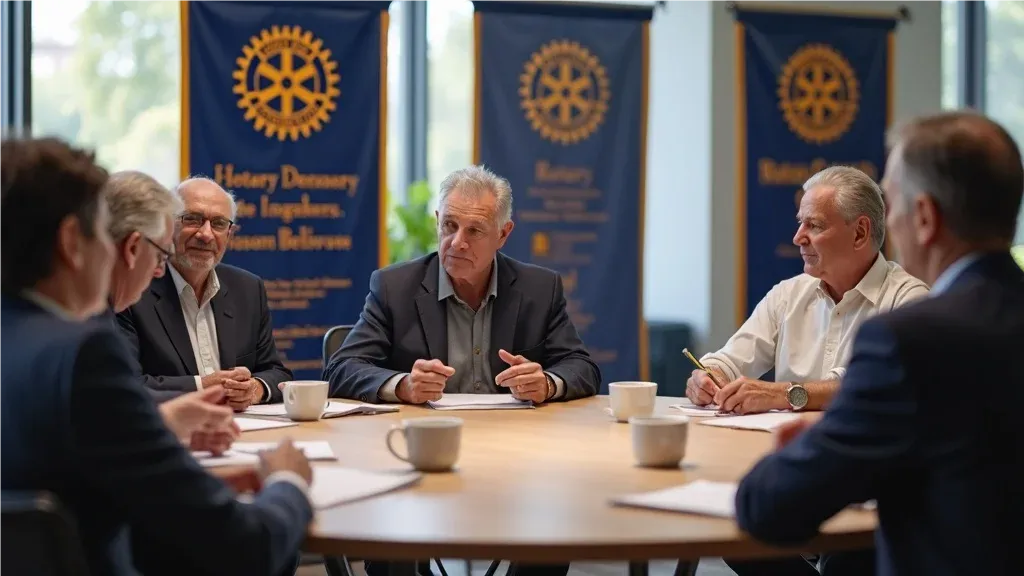
Rotary and the United Nations have a shared history of working toward peace and addressing humanitarian issues around the world.
During World War II, Rotary informed and educated members about the formation of the United Nations and the importance of planning for peace. Materials such as the booklet “From Here On!” and articles in The Rotarian helped members understand the UN before it was formally established and follow its work after its charter.
Many countries were fighting the war when the term “United Nations” was first used officially in the 1942 “Declaration by United Nations.” The 26 nations that signed it pledged to uphold the ideals expressed by the United States and the United Kingdom the previous year of the common principles “on which they based their hopes for a better future for the world.”





 Rotary event planning carries the potential for far more than just raising funds; it can transform your club’s entire approach to service and sustainability. Yet, too often, leaders and coordinators miss the opportunity to blend powerful fundraising with meaningful community impact.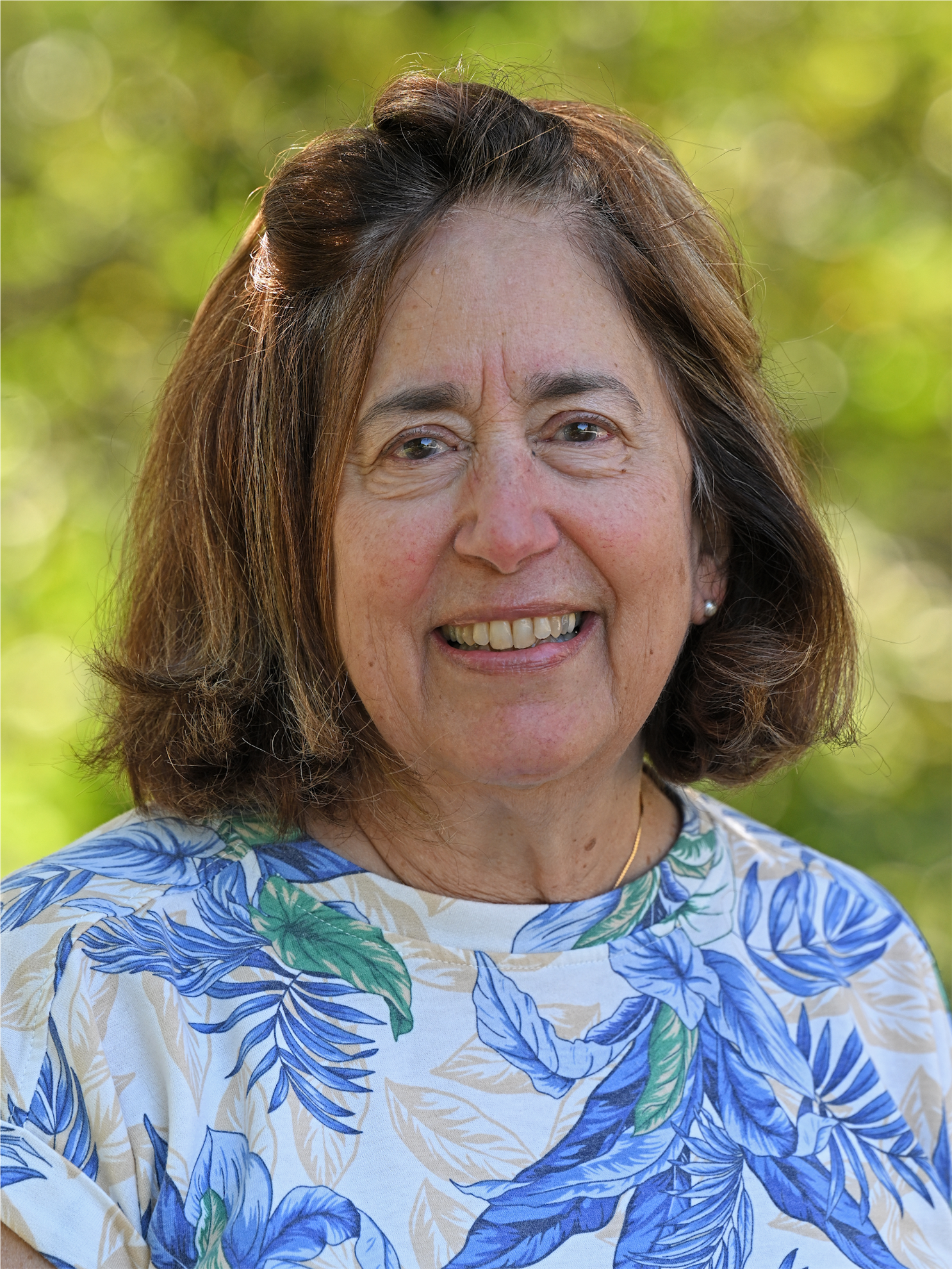














 Rotary and the United Nations have a shared history of working toward peace and addressing humanitarian issues around the world.